As a special treat this Christmas, I've prepared a video instead of an essay. Each film is introduced much more shallowly than I would allow in writing. The video is intended to be light and easy. Still, I hint at how each film can be understood in light of subverting Christmas themes. After all, subversion of the normal, transformation of dream into nightmare, a glimpse at what lies beneath the conscious, cuddly order--this is what horror is all about. Enjoy!
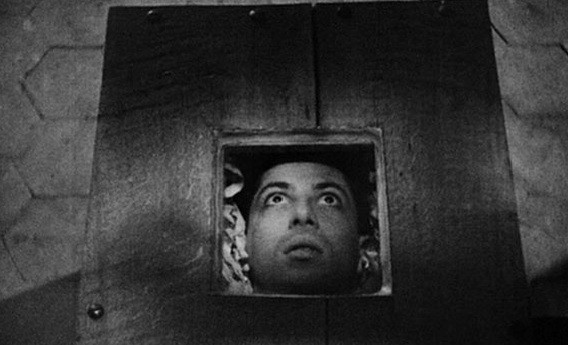
Top 9 Most Subversive Christmas Horror Movies
The Hole (2009) - 2.5/4
Horror as therapy: this is a remarkably consistent, usually implicit theme in horror cinema. One might say it's simply the nature of a strong narrative to have characters transform through their experiences; and when that narrative concerns horror, unsurprisingly the transformation is due to experience of horror. That is to some extent true. But one wouldn't refer to just any transformation as therapy. There's something peculiar about horror that is therapeautic. Horror is facing not just a fear, but an unpleasant truth about ourselves and suffering for it; it's simultaneously an indulgence and a punishment. In Robin Wood's account of Hitchcock, he suggests this therapy is for the protagonist first and for the audience identifying with the protagonist second. For both it is a nightmare come to life that must be encountered and understood if it is to be transformative.
There are many instances. Take a recent film like Vacancy (2007). A feuding couple, haunted by the accidental death of their son, are put through such a horrific ordeal that the guilt poisoning their relationship is entirely remedied. A similar dynamic is present in the classic Straw Dogs (1971), in which an easily-cowed intellectual kills a group of yokels who raped his emasculating wife and, as a consequence, is happier than he's ever been in his life. His marriage is ruined, clearly; but he's transcended his wife. He has become a strong male, capable of violence, through the ordeal: this is a good thing in Peckinpah's universe. Romero often uses the therapy structure as well. In Monkey Shines (1988), for instance, an alpha male is placed at the mercy of a female monkey; he only triumphs because he has learned, through his ordeal, to view a woman as an equal. In all films the horrific situations fix the protagonists of some imbalance, some psychological or social fault. This taps into the same well as a host of familiar platitudes: "Everything happens for a reason," "What doesn't kill us makes us stronger," etc.. However, the therapy dynamic occurs on a subtler, less triumphant level as well. As Carol Clover argued, the Final Girl tradition in slasher films is really about fixing an excessively independent girl through horror. Her friends have already gone too far and perish; she alone has the option to turn back and be a Good Girl.
With that prologue in mind, let's dive into The Hole, directed by old master Joe Dante and written by the author of the aforementioned Vacancy, Mark L. Smith. A magic realist story, the film concerns a teen boy (Chris Massoglia) and his younger brother (Nathan Gamble) finding a bottomless pit--cleverly concealed with a trapdoor beneath a throw rug--in the basement of their new home. With nothing else to do in the small town, the brothers and their sexy*, teen neighbour begin probing the hole for answers, but find themselves the probed instead as the hole gazes into their deepest fears and confronts them with what it finds.
Each of the youths gets a fear to confront. The young boy must face clowns, the older boy his father, and the girl a tragedy from her past. They of course don't realize what the hole is doing until the contrived moment in the narrative where realization must dawn. Prior to that, it all seems to be random creepiness. Upon discovering the hole's sinister effects, they research the hole by consulting Creepy Carl (Bruce Dern), the previous tenant of the house and a character we've seen a hundred times before: the antisocial kook who provides a piece of key information. They implausibly get all the right information at just the right time in every instance and set about facing their fears one-by-one.
If the above plot description doesn't make it clear, the film's narrative is riddled with cliches. How the characters come to the conclusion the the hole makes them face their fears, how they realize simultaneously that one of the hole's manifestations is from the girl's past, and the relationship between the mom and her teen son is all the lazy and contrived sort of plotting and drama-building we've seen in countless other films. One might say the film is aimed at a younger audience, and indeed it is; but twelve-year-olds, already pretty media savvy, do not need such a primitive, dumbed-down structure. The film plays like an episode of Eerie, Indiana--Joe Dante's contribution to the world of television--extended by an unnatural forty-five minutes.
Not only the narrative is diluted. The film has a pretty heavy-handed moral I found displeasingly trite: All you have to do is face your fears, understand them, and they will have no power over you. To be fair to Dante and Smith, their definition of 'fears' is broad enough. The two teenagers seem to feel more guilt than fear. The boy feels guilt for the abuse he and his brother have suffered at the hands of his father; the girl for the event in her past. Although in what sense guilt and fear are related emotions is, of course, not explained, it's fairly obvious that these emotions feed one another in various ways.
The moral itself is arguably not that problematic. Psychoanalysis is all about understanding and facing our repressed fears, guilt, and desires. The way the film presents the moral is what's disappointing. First of all, understanding and facing fears is not a quick, simple process. One can't merely destroy a clown doll to overcome one's fear of clowns or throw a belt buckle at an abusive father to overcome the fear, guilt, and shame he's instilled in one's psyche. This is a ridiculous and cavalier treatment of the psychology of children. Compare to a film like Curse of the Cat People (1944), where the child's creative impulses and fantasy life are repressed until they bubble up in the form of an imaginary friend: her father's deceased first wife, the individualistic Irena of Cat People (1942). Curse of the Cat People takes child psychology seriously. The Hole does not.
Second, the hole itself is clearly some sort of mirror to the subconscious. The signifiers are all present: it's in the basement, bottomless, dark, refuses to be covered up once opened, and produces what the children don't want to face. Creepy Carl refers to the hole gazing into its victims and that's what it does: it looks into the mind and manifests what's negative, makes the children face it. This is a really clever device and mirrors what horror films generally do. As I claim above, horror films, like the hole, make us face our repressed anxieties and desires; we leave with them either freshly repressed or destroyed. (Increasingly, however, we leave the theater or turn off the DVD with the monster triumphant. Arguably this is better. But that's a discussion for another day.) In a sense, the hole is offering the the children the same therapy horror films offer us. We know the hole will never kill the children, so like a horror film, it's a non-threatening way of facing those repressed fears.
But this is the problem: repressed fears are never straight-forward. If the hole is mirroring the subconscious, one would expect it to be considerably more inventive. The subconscious is beyond logic, realism, order, language; a realm of nightmares, to push the spatial metaphor. The bottomless black pit that is the hole suggests Dante and Smith are aware of this--of course they are! Yet, all the hole manages is the most superficial horror: clowns, abusive dads, and a traumatic experience. As Bruce Kawin writes, "One goes to a horror film in order to have a nightmare...whose undercurrent of anxiety both presents and masks the desire to fulfill and be punished for certain conventionally unacceptable impulses."* Similarly, when Robin Wood writes of Hitchcock's therapeutic films (Rear Window, Marnie, Psycho), he notes the film follows indulgence in some deviance before the therapy. A fear of clowns is most likely a subconscious mechanism for evading a more pressing and disturbing repression, a fear of a part of oneself and the consequences of indulging it; that would have been much more fascinating to explore in a horror film. Instead, we get a creepy clown doll anyone would be frightened of. And a fear of an abusive father is hardly a deep-rooted, subconscious fear; it's a pretty reasonable thing to fear, in fact.
The basic idea of having children developing by facing their fears was done much more interestingly and with a more imaginative touch of surrealism in an episode of the '80s television series The Real Ghostbusters, entitled "The Boogieman Cometh." When a film compares unfavourably to episodes of syndicated television cartoons, even very good ones, there's a problem. Considering Smith could have had the hole do just about anything, it's so unfortunate it was limited by his imagination to the most banal ideas. We have no symbolism, no psychological depth, none of the rich imagery the history of horror films have yielded.
 I brought up the therapeutic structure found in horror films at the beginning of this review because The Hole employs it quite explicitly. The hole only loses its power when the fears it presents are faced. Creepy Carl, who padlocks the hole and leaves the house is merely repressing his fears, not overcoming them. When the hole is re-opened, he pays for his repression. Undergoing horror therapy is the only solution. The problem with this film is that the fears are so shallow and their solutions so immediate and brute that if it's therapeutic for the characters, the audience does not share that therapy at all. And since we can't share the therapy, the climactic confrontations with the hole really lost my involvement. Not because I was thinking of therapy, Bruce Kawin, and Robin Wood while watching, but because it was all very unimaginative.
Even Joe Dante's visuals, one of the pleasures of the film, could have used more imagination. He gets what milage he can out of the Screenwriting 101 screenplay, treating us to some fun expressionism where he's able. (In one of the film's many sight gags, there's even a reference to the German expressionist classic, Orlac's Hande.) The climactic decent into the hole yields some pretty impressive visual ideas in a Dali-esque deterioration of childhood memory. Also particularly enjoyable is the stop-motion animation of the various creatures from the hole. Before one thinks this is a remake of The Gate (1987), the creatures from the hole are mostly human. Yet they move like puppets. There's something alarmingly uncanny in that, not unlike the unsettling denizens of a Svankmajer film.

My concerns suggest the film is lacking in ambition, a little too complacent and lazy. But that needn't stop a film from being fun, right? Indeed, The Hole is still an enjoyable experience. From my own memories of watching Eerie, Indiana as a child, I suspect children of twelve and under will find it very enjoyable. The relationship between the brothers is playful, the girl next door charming in a Lolita sort of way, and their investigation into the nature of the hole had the natural pull that any investigation into a mystery will have. Moments of seriousness, such as the obligatory Chat with Mom scene in which she asks her teenage son to help her make things work, are thankfully few and far between, so we can continue to watch Joe Dante play with toys. Why else does one watch a Joe Dante film if not to see him playing with toys? Still, this is a far cry from the brilliance of The 'burbs (1989) and Matinee (1993).
*1 - If you feel guilty for finding the young lady in The Hole sexy, I'm pleased to inform you that Haley Bennett was in her twenties when the film was made.


*2 - from Kawin's classic essay, "The Mummy's Pool."
Short Reviews for Dec. 6, 2010: French and Cheese
La Rose de Fer (1973) - 3/4
Iron, fog, and stone
Are met with perky nipples
Amidst skulls and bone.
Ils (2006) - 2.5/4
A film so economical couldn't begin in kindergarten for nothing.
So I guessed correctly.
Still, the suspense of the picture is undeniable.
I had to suspend my belief three, four, five times!
Still, the terror of the picture is undeniable.
How Strangers took a page or two from this book!
Oh, but found a prettier deathtrap.
Tis only in Romania floors and walls are the same colour.
I could watch her in her panties all day.
House of Wax (2005) - 3/4
Remake: Firstly, to call House of Wax a remake is tantamount to libel. Against whom, the original House of Wax (1953) or the present House of Wax, I couldn't say. The only thread they share in common is a murderous wax artist. Where The Thing (1982) and Thing from Another World (1951) share the arctic setting as well as the alien invader, House of Wax has nothing but the wax museum in common with its predecessors House of Wax (1953) and Mystery of the Wax Museum (1933).
Ambition: Both Mystery of the Wax Museum and House of Wax were technologically ambitious films. Mystery of the Wax Museum is perhaps the earliest feature-length colour horror film. And House of Wax was famous for its 3D. (The paddle-ball guy is infamous.) There is no technological innovation in House of Wax (2005). But the art direction is surprisingly ambitious and fulfills those ambitions handily. The film is arguably even more ambitious than its predecessor, insofar as it makes not just people out of wax but entire buildings. It really is impressive.
Narrative: The narrative is needless to say a Dead Youngster Movie. A group of young people are offed by the maniacs for no good reason other than "They're maniacs!" By making the youngsters slightly older, around 25, the film has a certain emotional maturity not too often found in such films. Moreover, the body count isn't high. Still, despite the paucity of characters, several are sidelined and entirely undeveloped.
Subtexts: Unlike many films of this sort, the girl and her boyfriend aren't the protagonists, but a girl and her brother. This is predictable to some extent, as the film's major inter-character conflict is between them. Any horror film that tries to give itself a little depth a la Screenwriting 101 does this: a personal conflict amongst the characters to parallel the more pressing conflict with the villains. You see it used clumsily in Vacancy (2007), The Strangers (2008), and many, many other run-of-the-mill screenplays. And this is indeed a run-of-the-mill screenplay. For some reason the serial killers are separated siamese twins. An homage to de Palma? I'm not sure what's going on there. Blood is thicker than goopy, hot wax? I dunno.
Scares: Scares come from vulnerability. If a character stands in front of a dark window, we automatically grow tense, because she's vulnerable. The tension reaches its peak and simultaneously dies--like a supernova--when the attack is launched. Jump scares are consequently the weakest of scares because they begin, peak, and die all in one fell swoop. House of Wax uses NO jumpscares. Instead they use this other trick: You think a protagonist is hiding somewhere, the maniac goes to check that spot, and while the POV is with the maniac, the protagonist has slipped away out of frame. So we expect to see her get caught, the tension mounts, mounts, mounts and BOOM--she's not there! Tension is relieved without peaking, but it's still effective.
So that's House of Wax (2005). It's entertaining, inventive, and capable enough to never become annoying.
Unrated: The Movie (2009) - 1.5/4
There are these bimbo actress babes walkin' through the woods, right, and they're not wearing woods-walkin' clothes 'cause they're stupid bimbos. And there's this Eastern European-lookin' dude with a camcorder and he keeps sayin' "Action!" but there's no script--kinda like this movie--and he falls down a lot, which is funny, 'cause there's comedy sound effects like BOING.
And they get to the house and they're all like, "Sheeeat, this house stank," 'cause it's just a dirty cabin in the woods and the establishing shot was made in photoshop. So the bimbos are yellin' at the dude and then at each other, sayin' like, 'Old bitch!' and 'Piss bitch!'--taxing all their creativity. So one bimbo leaves. And the dude just whacks off to pictures of the director.
And sometimes they try to say stuff in like a conversation, but nobody knows how to make a conversation, so they're just kinda sayin' stuff in the general space of each other and nothing's really reachin' anyone and they keep repeating the same things over and over and it's really frustrating for everyone involved, including me.
Then SATAN shows up, and he's a chick with beams of light coming from her nose! Whoah! And she has this spider and a little screaming worm thing, but he feeds the worm to the spider 'cause, I dunno, the spider's gotta eat. Then BOOM! lightning dislodges a book. And they've never seen a book before, but they're thinkin' it's cool. But it's not. It's bad. And the chick who left suddenly appears in a reaction shot, which is also not cool. It's bad.
And the monsters start comin' out of the book. And there's like this melty latex guy and he's all like BLARGH! and this fat zombie guy and this other guy named Karl who sings a song in broken English about 'desaster' and this chick with huge, fake tits and she does a little dance on TV and never stops rubbing her funbags 'cause it's probably cold.
So they neuter the dude. And the chicks are all like, "This is too much, we don't even have our own trailers!" so they start kicking the monsters. And uh the monsters don't like that too much so they rip the bimbos up, even the old lesbian one. And the chick who was supposed to have left, well, she hasn't heard anything, 'cause she had water on her face. Then her face just melts, I dunno why.
But there's this other bimbo who has like some character development goin' on 'cause her parents were murdered and she even gets a dream sequence during the murders and doesn't wake up 'cause the 12-foot cabin is just so big who can keep track? Finally she gets up and the monsters are all there, but fortunately so are the machine guns that were never in the movie before and she's like shootin' them BANG BANG BANG and suddenly she's in a g-string and she keeps shootin' 'em and there's this song about rainbows and unicorns and then she machetes them and then she shoots them summore. THEN she calls them cocksuckers and that sends them to the pits of hell and stuff 'cause they're homophobes. Then she starts posin' for the camera with her machete and gun and g-string, which is kinda hot but kinda stupid--just like the rest of the movie. And then it ends, 'cause the experience taught her she doesn't have to feel guilty about her parents' deaths anymore.
This is a really stupid movie that's half-way Lucio Fulci film (audience-pleasing gore-fest) and half-way Chris Seaver film (a collection of in-jokes to amuse the filmmakers--and only the filmmakers). Sadly, the flavour of Seaver overwhelms the delicate Fulci undertones, making this a rather unappealing dish, despite the tasty garnish of tits and lesbians. I think all the dialogue that goes nowhere, token character development, and narrative chaos is intended as some sort of parody of bad horror filmmaking. And y'know, it kinda works. And just as a parody of film noir is itself a film noir, this is a pretty good instance of bad filmmaking. Unrated: The Movie is the cinematic equivalent of an idiot savant. Make of that what you will.
Nekkid: 3/4
Gore: 3.5/4
Comedy sound effects: 18
Humour: 3.5/4
Short Reviews for Nov. 29, 2010: Wynorski and Misc.
Three Jim Wynorski Films
Sorority House Massacre II (1990) - 2.5/4
Jim Wynorski to the rescue. If you weren't already confused, in the stunning sequel, Wynorski gives you flashbacks to SLUMBER PARTY Massacre instead of SORORITY HOUSE Massacre, which this is supposed to be the sequel to. So even the director can't keep 'em straight. No matter, 'cause Wynorski takes all that was right about Slumber Party Massacre--great titties--and gives us more, more, more. Wynorski contrives every event and every angle to show us more T&A, bless 'im.
Five bodacious babes who wear only underwear. Greatest thighs in a motion picture, Robyn Harris. Stacia Zhivago, who looks like Laura Dern as a pin-up girl--later became a doctor. Melissa Moore, a bit of a butterface, but what an amazon. Michelle Verran, the sweetest rack in the film. Dana Bentley, a raven-haired cutey with big nostrils, now surgeried herself into Pete Burns territory. Low-angle panties. High-angle cleavage. On her knees. Out in the rain just to get wet. Orville Ketchum, the man who never dies. Bridget Carney as Candy, the stripper with a booty so fine you'll cry tears of semen. Random racism from Abdul and Schmabdul. Satana the remarkably unsatanic stripper. Jealous lady cop. Random showers. Ouija board seance. Drunk titties. Angry titties. Betrayed titties. Afraid titties. Squeakin' titties. "Let's work together" titties. And of course, ass-kicking titties. And a little romance for the lady viewers.
Nekkid: 3/4
Gore: 2/4
Tequila-swillin' sluts: 5
Humour: 3/4
Sorority House Massacre III (1990) - 3.5/4
AKA Hard to Die (a much more appropriate title)
Read my review of Sorority House Massacre II? Well this is the same film cranked up to 11. Really, some scenes are lifted almost exactly from SHM2. Except this one's set in a upscale lingerie shop and not a sorority house at all. The temps are in for inventory and what kinda temps do they hire? College kids? Mike and Joel? Nope, they hire lingerie models! who wear lingerie and high heels almost the whole movie--except for when they take turns having a shower scene.
But that's not the essence of the film. No, this is an epic battle between good and evil, the great demon-hunter Orville Ketchum versus the diabolical spirit of Hokstatter, brought to its final chapter. Both are HARD TO DIE--the question is, who is HARDEST? Me, after watching these sexy babes romping around in their upscale panties with big guns.
Babes in lingerie. Titties squeak when you wash 'em. Orville still eats raw meat. Scared tits. Bloody tits. Soapy tits. Possessed tits. Gun-wielding tits. Bouncing tits. Naked tits. Wet tits. A few dead tits. Stabbing, shooting, stapling, paper-pick stabbing, ball-kicking, head-pounding, and choking. Weirdest Chinese food delivery costume ever. Burning weirdest Chinese food delivery costume ever. Babes with guns. Babes running. Babes bouncing. Babes climbing stairs. Babes moving boxes. Babes moving filing cabinets. Gratuitous porn shoot. Several gratuitous showers. Gratuitous dirty feet. And a little romance for the lady viewers.
Nekkid: 3/4
Gore: 1/4
Babes with guns: 3
Humour: 4/4
976-Evil II (1990) - 2/4
That wacky, Satanic calling service returns, this time without Sam Ritter (No? Google Image Search, safe search off, enjoy.), and unleashes more nonsensical terror. The film gives no further explanation, so why should I?
Hotline to Satan. Creepy old man. Evil creepy old man. Lecherous creepy old man. Waste of good POA. Bad Vincent Price impression. Good Vincent Price moustache. Great set piece: It's a Wonderful Life...with ZOMBIES! Death by television. Death by phantom car. Death by prop stalactite. Pizza attack. Oven attack. Daddy's little girl: nice tits and slutty, cut-off jeans. Half-wit cop. Exploding drunk. Tough guy on a bike--named Spike. Puttin' the move on Daddy's girl. Eatin' fries. Drinkin' beer. Ridin' the hog. Warnin' about the number. Breakin' n' enterin'. Scrutinizin' phone bills. Astral projectin'. Turnin' down Brigitte Nielsen circa 1990--he's gay. And a little romance for the lady viewers.
Nekkid: 0/4 - Really? In a Wynorski flick?
Gore: 1/4
Times you think, "That's not what a phone sounds like": 14
Humour: 2/4
Bikini Girls on Ice (2009) - 1/4
Bikini car wash meets random killer at a rundown gas station--the title tells the rest.
Lots of girls in bikinis. Cinematographer couldn't light his way out of a paper bag. Smart girl with deep voice, reluctant to wear bikini: obviously the Final Girl. Her peppy, cute friend with a touch-o-the-slut: obviously destined to be killed in a harrowing moment. Car washing montage. Prostitution. Pointless sex scene with a bonus, "Don't touch me!" Slutty girls. Bitchy girls. Lezzy girls. Nerds with a bus. Old man with a warning. French tourists with a gas can. Killer can move faster the light--screw you, Einstein. Killer makes no sound--obviously a ninja. Obsession with ice baths--definitely a ninja. Girls keep wandering off alone--guess what happens? Dead dog. Dead slut. Dead tourists. Dead bitch. Absence of girls with their bikinis OFF. Absence of interesting kills--unless black-outs interest you. Absence of interesting gore. Stupid, stubborn victims. Stupid, unimpressive killer. Deus ex machina--we saw that coming. And a little romance for the lady viewers.
Nekkid: 0/4!
Gore: 1/4
Times a victim asks the killer, "Why are you doing this?": 6
Humour: 1/4
As a Quebecer myself, I apologize for my fellow provincemen's lack of ambition and for such a disappointing waste of a good title and several good pieces of ass.
Hack-o-Lantern (1988) - 2/4
Produced and directed by Bollywood rejects Raj Mehrotra and Jag Mundhra respectively, Hack-o-Lantern is a preposterous satanic cult/slasher hybrid about a young man groomed by his grandpa to take over his cult.
Dad wants grandpa to leave the boy alone, so he's gonna head on out there. Turns out 'out there' is just next door, where a satanic cult is practicing a ritual no-one seemed to know about--just next door!
The boy grows into a moody, muscular loser who listens to metal and works out all day. One day he listens to metal and fantasizes a random '80s music video, in which a black girl struts down stairs, sticks out her tongue, and shoots '80s lasers at the band until only the boy is left.
Meanwhile, his sister is getting ready for a Halloween party and sets her best friend up with her normal brother. Normal enough. Then her brother screws her best friend in the cemetery on the first date. The best friend tells the sister about it and, rather than be disturbed, they go back to the cemetery together to look at the spot. Don't all sisters do that? Stare at their brothers' fresh hump-spots.
It's almost at the climactic showdown when a comedian (the great Bill Tucker, remember him? He's famous for being the comedian in Hack-o-Lantern!) steps out and begins doing a lengthy impression of a one-eyed turkey. What? I don't know.
Sexual harassment. Lecherous grandpa. Very campy grandpa. Incest. Truck full of pumpkins. Graveyard sex. Sex on top of a dead body. Satanic cult. Gee, grandpa's evil, whodathunkit? Random '80s metal video. Random awful comedian. Random snake lady. Geisha. Cowboy. Scary cult of... uh, about four people. '80s lazers. Satanist vs Satanist showdown, with pitchforks. Patricide. Matricide. Infanticide. Turkey impressions. Bald beaver. A few titties. Bad jokes. And a little romance for the lady viewers.
Nekkid: 2/4
Gore: 2/4
Awful puns: 5
Humour: 3/4 - kinda in Troll 2 territory here
Short Reviews for Nov. 22, 2010: Yuzna and Russo
This is a new feature on Lair of the Boyg. Because my reviews are usually so long and in-depth, I find I don't get to write about even a tenth of the films I'd like to write about. With a Short Reviews feature, I can provide lighter, free-form, more playful reviews that cover films I either can't or don't feel inclined to write about in depth.
Three Brian Yuzna Films:
Silent Night, Deadly Night 4 (1990) - 3.5/4
Sometimes you really do find a brilliant film buried in a sequel. Brian Yuzna's SNDN 4, for instance, subtitled 'The Initiation' is a Cronenbergian attempt to deal with the man-hating popular feminism of the '80s from a reasonable man's point of view. Borrowing ideas from the history of horror cinema, the film tells the story of an underappreciated but ambitious woman who takes a news story against her boss's wishes and finds herself sucked into the trap of a coven of witches. The film poses a lot of interesting questions about guilt, resentment, bigotry, religion, and oppression; and, gratefully, it doesn't really give answers.
Clint Howard. Inadequate, half-eaten hamburger. Giant, freaky centipede thing. Cockroaches everywhere. Abrasive, ambitious overachieving chick--everyone thinks she's a bitch and they're right. Her boyfriend thinks she's a fine piece of ass, and he's right. Giant cockroaches. Vomiting in the toilet. Spontaneous combustion. Lezzy, witchy bookstore owner--I've known a few of those. Rosemary's Baby-style coven. Fat naked guy with a nose-boner. Gratuitous violence to Clint Howard. Abdominal insect penetration. Insect-vomiting. Insect-crushing. Hideous adult birth scene. Resentful, man-hating women. Women who say, "But he's a man, what does his life matter?" Men who say, "Women belong in the kitchen!" Girls who say, "Get off of me! You're like a dog in heat!" Bad beer jokes. Lots of gooey stuff. Human sacrifice. The secretary from Moonlighting playing basically the same character. Body-morphing a la Videodrome. Flame-shooting arms. Combusting legs. Gratuitous violence to a bigot. They're burning Christmas. Judaism vs Christianity. Christianity vs Paganism. Apatheism wins. How quickly children forgive. And a little romance for the lady viewers.
Nekkid: 1/4
Gore: 2/4
Icky, gooey stuff: 4/4
Humour: 2.5/4 - come on, it's got Clint Howard.
Rottweiler (2004) - 2.5/4
Yuzna's killer dog film about an American in a European country who escapes prison and is pursued by the prison's cyborg dog. Probably the most ambitious killer dog film ever made. Not that the competition is fierce.
- Hero and dog are linked on some level, destined to destroy one another.
- The loss of the hero's girl and the robotic mechanism of the dog occurred together.
- The hero hallucinates the dog, making it a spectral sort of conscience, like Francis Thompson's Hound of Heaven. Jealousy, guilt, and guilt for jealousy.
- The chase itself is really just an excuse for a dark, even morbid picaresque romp involving thieves, drug dealers, whores, female rapists, flower-picking little girls, crazy industrialists, bounty hunters, and more.
- Symbolism of the fog as our fumbling toward a destiny we can't escape.
- Symbolism of the scorpion, the cruel sting of death we can't escape.
- Dystopian world with countries run by a crazy industrialist Paul Naschy.
- Privileged thrill-seekers trying to escape ennui by infiltrating forbidden nations, getting in over their heads. At least the ennui is gone.
- The game of infiltration: infiltrating the mind and soul.
- The progress of self-realization, as the hero flees the prison of ignorance and arrives on the open shores of understanding.
- The supernatural visions, omens, hallucinations that pervade the story like fog make the film more expressionistic than realistic.
Despite some of the silliness, cliche moments, stupid writing, and sometimes-CGI, sometimes-puppet, sometimes-real dog, Rottweiler is far better than any made-in-Spain evil-robot-dog-movie has any right to be.
Nekkid: 0/4 for dudes, 1.5/4 for the ladies
Gore: 2.5/4
People the dog kills for no good reason whatsoever: 8
Humour: 1.5/4
Beneath Still Waters (2005) - 2.5/4
Yuzna ever seems to be in Stuart Gordon's wake. First with the Re-Animator series, now with heading over to Spain and shooting a Lovecraftian evil town flick. Gordon made Dagon (2001) and Yuzna gives us Beneath Still Waters (2005). How does it stack up?
Screenwriting 101: deepen characters with tragic backstories; have the male and female confide their tragedies to one another in a moment that ends in a kiss; the tragic backstory must come back to haunt the hero in the climax. Monster left over from The Resurrected or Castle Freak. Very '90s feel here. Effeminate evil sorceror. Kid-killing. Kid-eating. Jaw-breaking. Tongue-eating (is that what he's doing?!). Evil book. Evil fire. Evil seaweed. Spooky flooded town. Chained up satanists. A-hole cop. Cute Spanish girl in bikini--is she legal or isn't she? is it right to wanna plough her or isn't it? Oh, her bimbo friend looks old enough, must be okay. But her mom is young and bangable too--what a conundrum. Botoxed-out reporter. Wet-suits a-plenty. Annoying kids a-plenty. Awkward melodramatic exits a-plenty. Awkward character exposition a-plenty. Frog. Two-headed deformity. Self-mutilation. Magic mutilation. Characters who sit around watching murders. Orgy time! Titties on cake! Cake on titties ("Frosted flakes")! Man-on-man dry humping! Spanking! Whipping! Attempted screwing! Riding! Stripping! Impromptu bondage! Pretty tame stuff from the guy who gave us Society. And a little romance for the lady viewers.
Nekkid: 1/4
Gore: 2.5/4
Number of times Marcia is pronounced Mar-SEE-uh: 8
Humour: 0.5/4
Three John A. Russo films:
John A. Russo, the other Night of the Living Dead guy--kind of the 'loser brother' to George A. Romero--has had an interesting and uneven film career. Let's have a look.
Midnight (1982) - 3/4
A girl runs away from home, hitchhikes with some dudes in a van, and becomes the captive of some backwoods Satanists. Will daddy come to the rescue in time?
Religious fanaticism. Drunken stepfather. Rapey stepfather. Rendered unconscious stepfather. Takin' to the road, 1960s roughie style--with one bag n' a gee-tar. Random sexual proposition. Nice guys in a van. Sensible black guy. Fun with shoplifting. Rejected chips!!!! Preacher with a long, boring story and a cute daughter. Good samaritanism. Campin' under the stars. Random racism. "White boy!" galore--that's more racism, isn't it? Yes, black racist. Fat, cackling hick--didn't Russo steal that from Just Before Dawn? Guy with tight, stuffed pants. Gratuitous frisbee game. Satanic rituals. Talkin' to dead mother. Girls in little dog cages--is it wrong I was turned on? Head removin'. Hippie shootin'. Girl slicin'. Preacher killin'. Hick shootin'. Body disposin'. Grocery stealin'. Christian prayin'. Hick burnin'. Hick clobberin'. Blood drinkin'. And a little romance for the lady viewers.
Kind of a summary of 1970s exploitation genres: Summa Exploitica.
Nekkid: Nein!
Gore: 2.5/4
Racists: 9
Humour: 1/4
Dark Craving (1991) - 3/4
A soft-spoken physician is burned as a vampire/witch for his experiments in curing diseases, helping people, not sleeping with his brother's slutty wife and similarly sinister activities. Centuries later he emerges from a landfill alive, well, naked, and a vampire with venomous saliva. He finds friends, enemies, romance, and despair in our strange, modern world.
Accusations of sorcery, like puss-drinkin'. Genteel vampire. Evil antique dealer. Naked guy emerges from a landfill. Not only is he a vampire, he's a no-good dirty Tory! Chat with a priest about fluid exchanges. Tom Savini weightlifting. Tom Savini shooting things. 1980s American thrash soundtrack. One of the most interesting explanations for vampirism I've ever heard: superstition and the accusations themselves have transformed an innocent, victimized man into the feared monster. Antique dealin'. Museum visitin'. Accidental little girl killin'. Bikini girl assaultin'. Saliva secretin'. Street thug killin'. Catholic confessin'. Inept vampirin'. Girl stalkin'. Vampire macin'. Vampire shootin'. Priest killin'. Needless backstory for police officer. Moon Unit. And a lot of romance for the lady viewers.
Nekkid: Just that vampire guy's ass.
Gore: 3/4 - Tom Savini
Useless information about minor characters: Lots.
Humour: 0.5/4
Santa Claws (1996) - 0.5/4
A boy murders his mother and her santa-suit-wearing fat boyfriend. The detective calls this "piss-poor behaviour", but the boy is allowed to roam free to become an adult and die-hard fan of scream queen Debbie Rochon (playing Brinke Stevens, basically). But who's gonna die hard? The men who are using, abusing, and trying to take away the lovely scream queen.
Debbie Rochon's titties. Camcorder cinematography a-plenty. Lots of hot girls showing titties and pussywillow. Milf titties. Hairy, old fat guy gropin' milf. Crazy scream queen fan. Lengthy discussion about what pathetic losers scream queen fans are. The glamorous life of a tittie photographer. Creepy neighbour no-one seems able to notice is extremely sketchy. Murder with tiny gardening hook that could barely pierce a half-inch of flesh. There is a santa costume at some point. Bitchy mother-in-law. Bitchy sister-in-law. Did you contact the divorce lawyer yet? Scream queens just get no respect. Makin' out with a mannequin. Nerd dream sequence. How many times are they gonna say Scream Queens' Naked Christmas? And a little romance for the lady viewers.
Nekkid: 2.5/4
Gore: 0.5/4
Times you think, "Russo should have known better": at least 50.
Humour: 0.5/4
Subscribe to:
Posts (Atom)